

In 6 weeks, from the first interview to a concrete change plan. A digital audit of a large cultural organization that delivered hard data, clear priorities and an implementation plan.
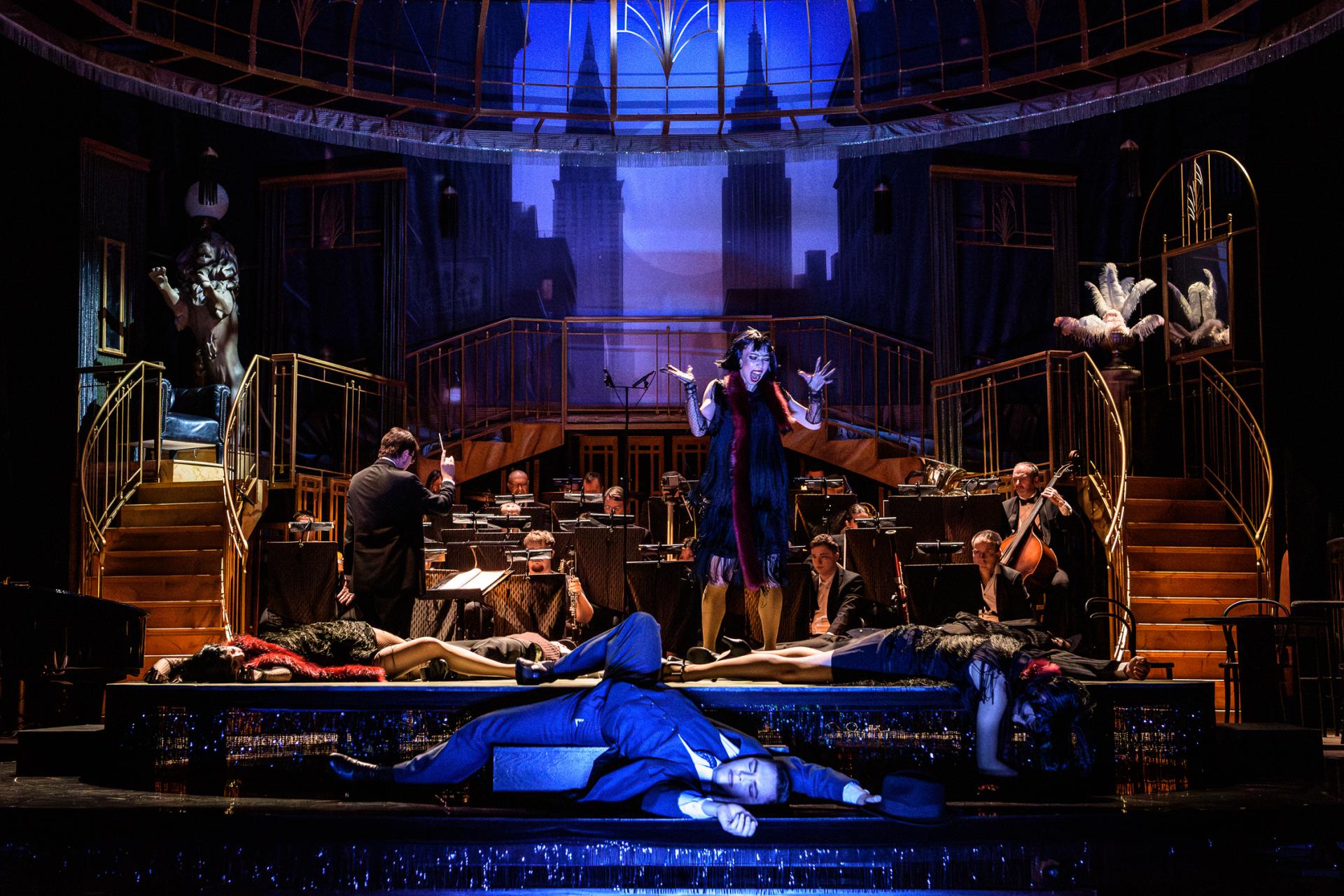
The South Bohemian Theatre – approximately 285 employees, four artistic ensembles and an education center. A complex organization where creative and operational processes of dozens of teams intersect.
The management felt that something was not working optimally. The organization was paying for a digital platform that part of the staff was not using. There was a suspicion of duplicate processes and unnecessary manual work. However, hard data was missing: where exactly the problems were, how significant they were and where to start.
A digital audit is not a technical IT audit of servers and networks. It is a systematic research of how people in an organization actually work – how they communicate, how they share documents, how they coordinate changes and where they lose time.
I combine methods from user research, service design and change management. The result is not just a list of problems, but a concrete plan for how to solve them – including timelines, responsibilities and a realistic estimate of complexity.
The entire audit was divided into several phases that followed each other and gradually revealed where the organization was losing time and where changes would have the greatest impact.
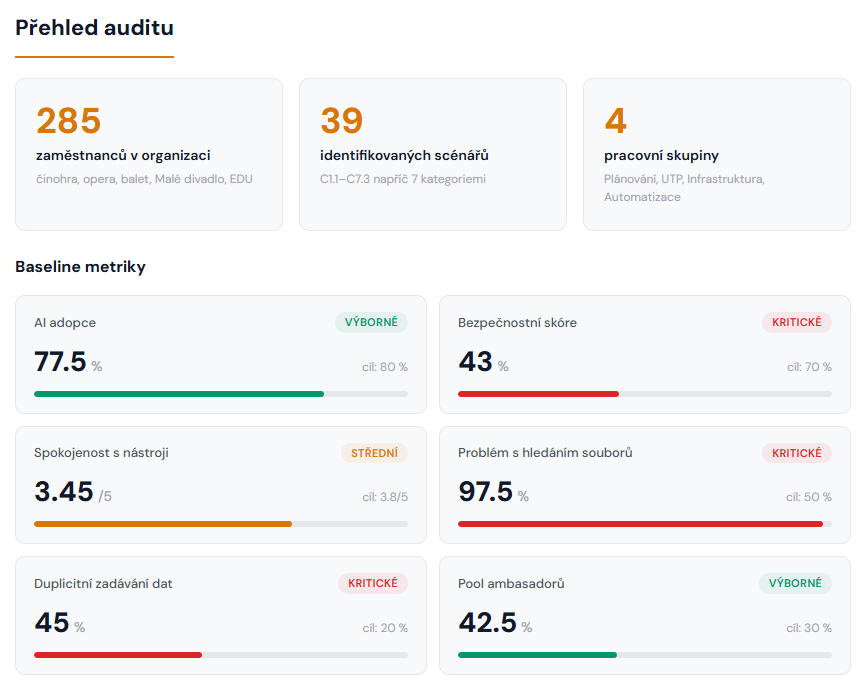
I prepared a structured survey mapping seven key areas – from the relationship to technology to communication, document management and security habits. The survey targeted leadership and middle management – it was completed by 40 key employees who have a direct impact on how processes function in the organization.
I conducted 17 in-depth interviews with carefully selected employees – from the director and department heads to frontline staff. In total, this resulted in nearly 17 hours of recordings in which I mapped real work processes, pain points, communication patterns and attitudes toward change in detail.
This was the most valuable phase. I systematically connected quantitative data from the survey with qualitative insights from the interviews and looked for patterns that would remain hidden when looking at individual sources separately.
Example: The survey showed that almost the entire organization had problems finding files. Only the interviews revealed the cause – six interconnected planning documents maintained manually and independently, with only one person able to make complex changes.
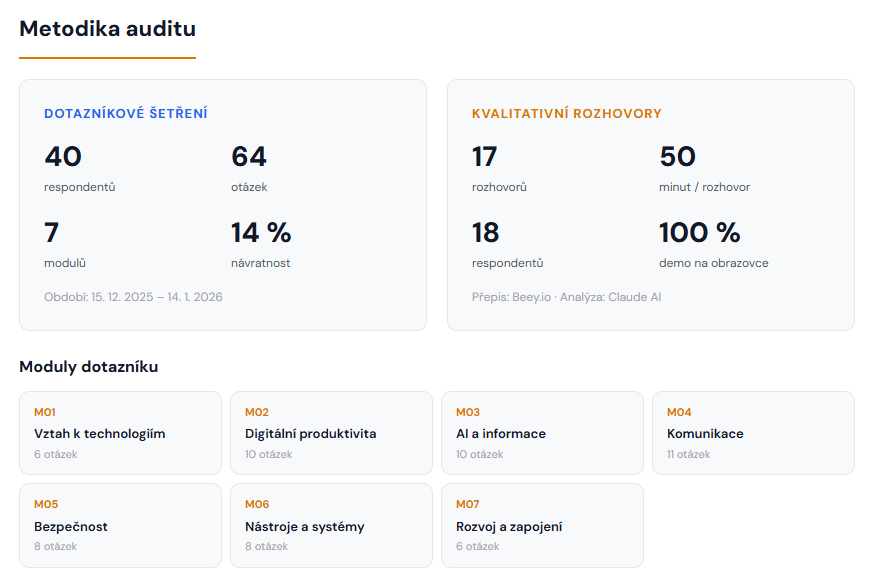
The final synthesis resulted in 39 specific recommendations. No abstract “improve communication” suggestions – each recommendation clearly states what should be done, who is responsible, by when and what impact it will have.
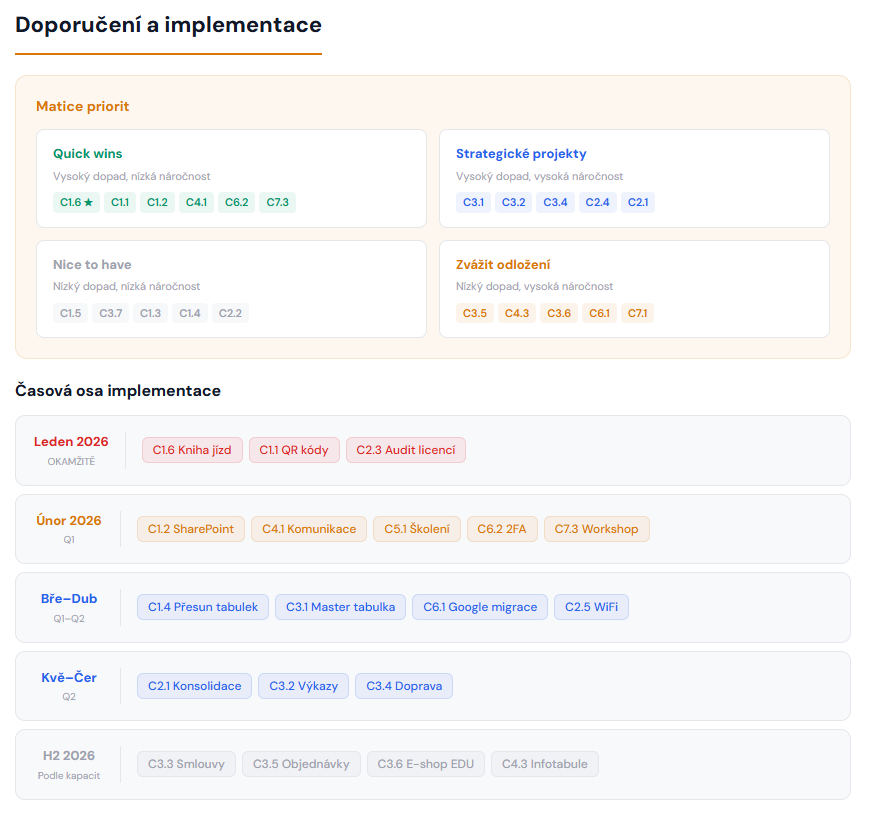
One of the most important outputs of the audit is baseline metrics – precisely measured values in key areas such as technology adoption, security habits, tool satisfaction and the level of duplicate work.
Why does this matter? Because without baseline measurements, you cannot:
In the case of the South Bohemian Theatre, the metrics revealed surprising findings on both ends of the spectrum. Some indicators were much better than management expected – for example, employees’ readiness for change. Others were alarming and required immediate attention. Without precise data, management would have focused on what is visible instead of what is truly critical.
The output of the audit was not just an analytical report, but a set of concrete materials and tools that the organization can start using immediately to gradually implement changes.
A detailed report connecting data from the survey and interviews. 39 recommendations, each including a problem description, proposed solution, impact and complexity assessment, responsible person and deadline. The recommendations were categorized from critical issues to strategic projects.
Each identified problem process was described and visualized in detail. I use BPMN 2.0 diagrams for process flows, journey maps to capture user experience including emotions and pain points, and service blueprints to map interactions between roles.
These visualized processes form the foundation for follow-up design sprints and other methods that help implement changes as efficiently as possible. The organization does not remain with just a description of the problem – it receives visual materials that can be used immediately.
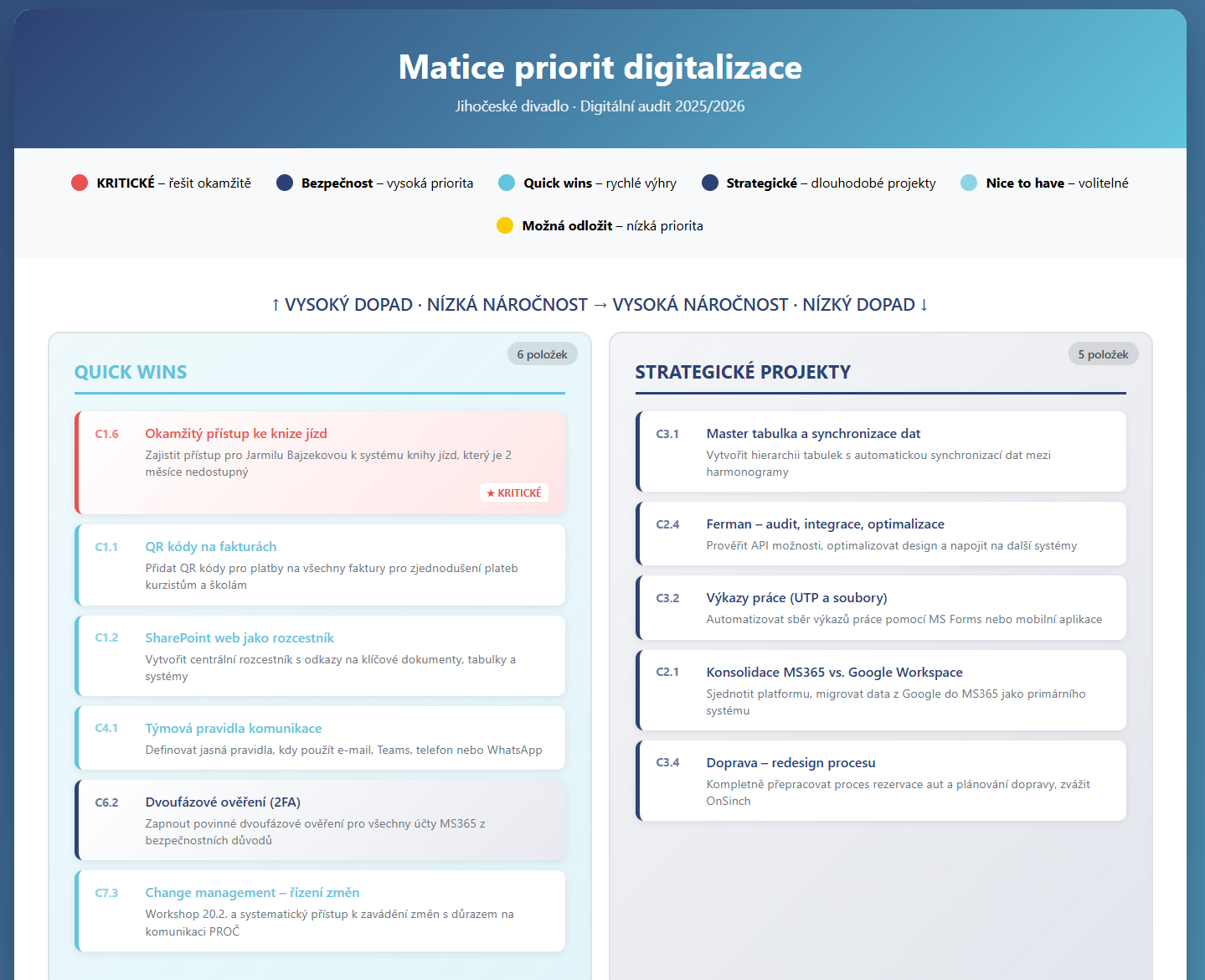
Instead of a static PDF, the management receives an interactive web application with key metrics, a filtered overview of recommendations and a visual priority matrix based on impact and complexity. It becomes immediately clear where to start.
A four-hour facilitated workshop – the transition point from analysis to action. Employees work in groups to identify solutions themselves and take responsibility for them. The workshop design is adapted to the participants’ level – in the theatre, we worked with processes and communication, not technical topics. The output is an action plan with specific steps, responsible persons and deadlines.
Thanks to the digital audit, the South Bohemian Theatre now has hard data instead of assumptions, a concrete plan with deadlines and responsible persons, and an information base for budget decision-making. The management now knows where to invest first and where the return will be highest.
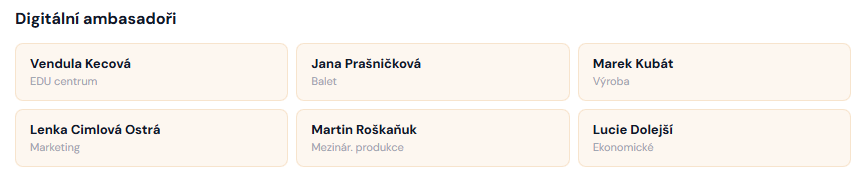
The organization has identified change ambassadors – specific people with the motivation and potential to lead digital transformation in their teams. And thanks to the measured baseline metrics, the organization can objectively evaluate progress after implementation.
The audit is followed by digital mentoring – practical support during the implementation of changes. I guide teams through individual implementations: from selecting tools to setting up processes and training key users.
The mentoring ensures that the audit recommendations do not remain only on paper.
The audit takes 6–8 weeks, but I handle the analytical work. Your team invests only a minimal amount of time:
That is all. Data collection, analysis, synthesis, visualizations, the implementation plan and workshop preparation are all handled by me.
From my experience, the audit process itself already starts to drive change. The interviews and survey lead people to reflect on their own processes, and smaller long-postponed problems often begin to be addressed even before I deliver the final report.
Research expertise. I combine methods from user research, service design and change management. I work with my own proven methodology, which I continuously refine.
People-focused approach. I map real employee behavior, not theoretical workflows. A digital audit is about processes and people, not technology.
Visual and interactive outputs. Journey maps, BPMN diagrams, interactive dashboards – materials that can be immediately used for further work.
Change facilitation. The audit is just the beginning. Workshops and mentoring ensure that the recommendations are actually implemented.

Let’s schedule a non-binding introductory call – we will go through your situation and design the scope of the audit tailored to your organization.
Mgr. Kateřina Švidrnochová Digital Transformation · User Research · Service Design
